
 EN
EN
Modern living spaces demand furniture solutions that combine functionality, durability, and space efficiency. Among the most versatile additions to any home, the foldable storage ottoman stands out as a design element that addresses multiple needs simultaneously. When evaluating furniture that must support substantial weight while maintaining structural integrity, understanding the engineering principles behind a high-weight capacity foldable storage ottoman becomes essential for making informed purchasing decisions. This dual-purpose furniture piece serves as both a comfortable seating option and a concealed storage solution, yet its true value lies in the strength and stability engineered into its collapsible framework.
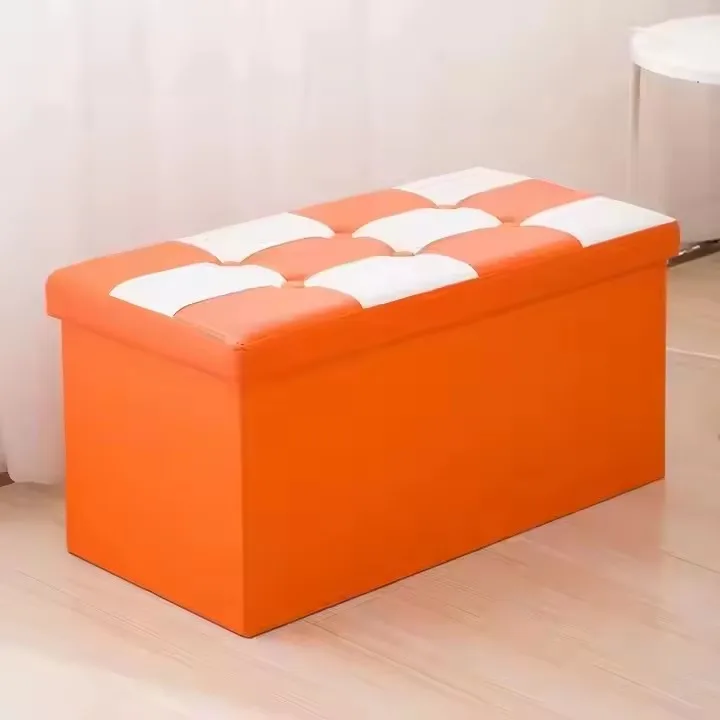
The structural reliability of a foldable storage ottoman directly impacts its longevity and safety in everyday use. Unlike traditional rigid ottomans, foldable designs must maintain load-bearing capacity while incorporating hinges, joints, and collapsible components that introduce potential weak points. The strength of these units derives from carefully selected materials, reinforced connection points, and geometric design principles that distribute weight evenly across the frame. For households requiring furniture that can withstand frequent use by multiple family members or accommodate guests during gatherings, the weight capacity rating becomes a critical specification that reflects the manufacturer's commitment to quality engineering and user safety.
Engineering Foundations of Load-Bearing Capacity
Material Selection and Structural Performance
The foundation of any high-capacity foldable storage ottoman begins with the selection of materials that balance strength with weight efficiency. Premium units typically feature internal frames constructed from reinforced medium-density fiberboard or engineered wood composites that provide superior rigidity compared to particle board alternatives. The frame's thickness and density directly correlate with its ability to resist deformation under pressure, ensuring the structure maintains its shape even when supporting substantial loads. High-quality foldable storage ottoman designs incorporate cross-bracing elements that prevent lateral movement and distribute downward forces across multiple contact points rather than concentrating stress on single joints.
Metal reinforcement components play a crucial role in enhancing the structural integrity of collapsible designs. Strategic placement of steel corner brackets, hinge reinforcement plates, and bottom frame supports creates a hybrid construction that leverages the best properties of both wood and metal materials. These reinforcements become particularly important at folding joints where repetitive opening and closing actions generate mechanical stress. The material thickness at connection points typically measures between twelve and fifteen millimeters in professional-grade units, providing adequate resistance against shear forces and preventing premature failure at critical stress zones.
Weight Distribution Geometry
The geometric configuration of a foldable storage ottoman's internal structure determines how effectively it channels weight from the seating surface to the floor. Engineers design these frames using principles borrowed from architectural load-bearing systems, creating internal cavity structures that function similarly to I-beams in construction. The arrangement of vertical support members, horizontal bracing, and diagonal stabilizers forms a three-dimensional lattice that prevents localized stress concentrations. When properly engineered, this geometry allows a foldable storage ottoman to support weight capacities ranging from 250 to 400 pounds despite its collapsible nature, meeting or exceeding the load-bearing performance of comparable rigid furniture pieces.
The footprint dimensions and base configuration significantly influence stability under load. Wider base platforms with corner foot placement at the extreme edges of the structure provide superior resistance against tipping compared to narrowly spaced support points. Premium foldable storage ottoman designs feature base dimensions that create a favorable center-of-gravity relationship, ensuring the unit remains stable even when weight is applied off-center during typical seating scenarios. The ratio between height and base width should ideally fall within the range of one-to-one-point-five to one-to-two, preventing excessive leverage that could compromise stability when users sit near the edge of the upholstered surface.
Stability Mechanisms in Collapsible Designs
Hinge System Engineering
The hinge mechanism represents the most critical component in maintaining both functionality and structural stability in a foldable storage ottoman. Industrial-grade piano hinges, which extend the full length of the connection seam, provide significantly better load distribution than individual hinge points spaced at intervals. These continuous hinges eliminate weak zones between discrete connection points and prevent warping or sagging that can occur with segmented hinge systems. The hinge material itself must resist corrosion and mechanical wear, with stainless steel or heavy-duty zinc-alloy construction being preferred for applications requiring long-term reliability under frequent folding cycles.
Locking mechanisms integrated into the hinge assembly ensure the foldable storage ottoman remains securely in its deployed configuration during use. Passive locking systems that engage automatically when the unit is opened provide user-friendly operation while maintaining safety standards. These locks typically employ spring-loaded detent mechanisms or over-center toggle designs that require deliberate action to disengage, preventing accidental collapse during seating. The locking force must be calibrated to resist the downward pressure generated by the rated weight capacity plus a safety factor, typically calculated at 150 percent of the stated load limit to account for dynamic forces during sitting motions.
Base Stability Features
The interface between the foldable storage ottoman and the floor surface incorporates design elements that prevent sliding, rocking, or uneven weight distribution. Non-slip foot pads made from high-friction elastomeric materials create secure contact with hard flooring surfaces while protecting against scratches and scuff marks. These pads should be replaceable to accommodate wear over time, with attachment methods that maintain their position even under lateral shear forces. The pad material durometer rating typically falls between 60 and 80 on the Shore A hardness scale, providing optimal balance between grip and floor protection across various surface types including hardwood, tile, and laminate flooring.
Advanced stability designs incorporate adjustable leveling feet that compensate for minor floor irregularities that might otherwise cause wobbling. These threaded adjustment mechanisms allow users to fine-tune the contact points, ensuring all four corners make firm contact with the supporting surface. This feature becomes particularly valuable in older homes where floor settling has created slight variations in surface height across a room. By eliminating rocking motion, adjustable feet enhance user confidence in the foldable storage ottoman's stability and reduce stress on the frame structure that could accumulate over time from uneven loading conditions.
Material Durability Under Sustained Loading
Compression Resistance of Upholstery Systems
The upholstered seating surface of a foldable storage ottoman must maintain its shape and comfort characteristics despite repeated compression cycles from users of varying weights. High-density polyurethane foam with compression ratings between 35 and 50 pounds per cubic foot provides the necessary resilience for long-term use without bottoming out or developing permanent depressions. The foam thickness, typically ranging from three to four inches in quality units, creates sufficient cushioning while maintaining proximity to the rigid support structure beneath. This balance ensures comfort without compromising the user's perception of stability, as excessively thick cushioning can create a sensation of instability that contradicts the actual structural soundness of the frame.
The covering material must resist abrasion, puncture, and UV degradation while maintaining aesthetic appeal throughout the product's service life. Synthetic leather materials engineered specifically for furniture applications offer superior durability compared to genuine leather in high-use scenarios, with tensile strength ratings exceeding 300 pounds per square inch and abrasion resistance surpassing 100,000 double rubs in standardized testing. These performance metrics ensure the upholstery maintains its integrity even when the foldable storage ottoman experiences daily use in high-traffic areas such as entryways, living rooms, or bedroom foot-of-bed placements where it serves multiple functions throughout the day.
Long-Term Structural Integrity
Repeated folding and unfolding cycles subject the frame structure to fatigue stresses that can compromise strength over extended periods. Manufacturers of premium foldable storage ottoman products conduct cycle testing that simulates years of typical use, verifying that connection points, hinge assemblies, and frame joints maintain their load-bearing capacity after thousands of deployment cycles. Industry standards typically require units to withstand at least 10,000 open-close cycles without significant degradation in performance metrics, though higher-end products may exceed 25,000 cycles in testing protocols. This testing reveals potential failure modes before products reach consumers, allowing engineers to reinforce vulnerable areas or adjust material specifications to ensure long-term reliability.
Environmental factors such as humidity fluctuations and temperature variations can affect the dimensional stability of wood-based components in foldable storage ottoman construction. Quality manufacturers apply moisture barrier treatments and sealants that prevent swelling, shrinkage, or warping that could interfere with the precise tolerances required for smooth folding operation. The finish applied to external surfaces serves both aesthetic and protective functions, creating a barrier against moisture infiltration while resisting scratches and scuffs from daily contact. These protective treatments extend the service life of the unit while maintaining the tight dimensional control necessary for proper hinge alignment and locking mechanism engagement throughout years of use.
Performance Validation and Safety Standards
Testing Protocols for Weight Capacity Verification
Reputable manufacturers subject their foldable storage ottoman designs to rigorous testing sequences that validate claimed weight capacities under controlled laboratory conditions. Static load testing involves placing calibrated weights on the seating surface and maintaining that load for extended periods, typically 24 to 48 hours, while monitoring for deformation, joint separation, or structural failure. The test weight usually exceeds the rated capacity by 25 to 50 percent, creating a safety margin that accounts for dynamic loading conditions encountered in real-world use. Measurement instruments track deflection at the center point of the seating surface, with acceptable performance defined as less than three millimeters of permanent deformation after load removal.
Dynamic impact testing simulates the forces generated when users sit down abruptly rather than lowering themselves gradually onto the foldable storage ottoman surface. These tests employ standardized impact masses dropped from specified heights onto the seating surface, generating momentary force spikes that exceed static weight equivalents by factors of two to three times. The structure must absorb these impact energies without catastrophic failure, joint separation, or hinge disengagement. Successful performance in impact testing demonstrates that the design incorporates adequate energy absorption characteristics and that connection points possess sufficient shear strength to resist sudden force applications without compromising user safety.
Compliance with Furniture Safety Regulations
International furniture safety standards establish baseline performance requirements that foldable storage ottoman products must meet to ensure consumer protection. Standards such as ASTM F3096 in North America and EN 12520 in European markets specify test methods and minimum performance criteria for seating furniture, including provisions for stability, strength, and durability. Compliance with these standards requires third-party laboratory verification, providing consumers with independent confirmation that products meet established safety benchmarks. Manufacturers who invest in certification demonstrate commitment to quality and accept liability standards that protect end users from products with inadequate structural integrity or stability characteristics.
Beyond regulatory minimums, leading manufacturers often exceed baseline requirements to differentiate their foldable storage ottoman offerings in competitive markets. Enhanced testing protocols may include extended cycle life validation, elevated temperature exposure to verify joint adhesive performance, and multi-axis loading scenarios that simulate unusual use conditions. These additional validation steps identify potential failure modes that might not emerge during standard testing sequences, allowing engineers to refine designs before production scaling. The investment in comprehensive testing translates to higher reliability in consumer environments and reduces warranty claims related to structural failures or premature wear in critical components.
Practical Considerations for High-Capacity Applications
Use Case Suitability Assessment
Determining whether a specific foldable storage ottoman design meets the requirements of an intended application requires careful evaluation of both rated specifications and actual usage patterns. Households with multiple adult users or frequent guests benefit from models with weight capacities at the upper end of the spectrum, typically 350 pounds or higher, to accommodate diverse body types without concern for structural limits. The intermittent loading pattern in residential settings differs significantly from commercial applications such as retail fitting rooms or hospitality environments where continuous use throughout business hours generates cumulative stress that accelerates wear on mechanical components and upholstery materials.
Space constraints often drive the selection of foldable storage ottoman solutions, but users must ensure that weight capacity is not sacrificed for compactness. Smaller footprint models achieve portability advantages but may compromise on internal bracing structures that contribute to load-bearing performance. The dimensional relationship between storage volume and seating surface area provides insight into design priorities, with units featuring proportionally larger seating surfaces relative to storage cavities typically offering superior weight capacity due to more robust top panel construction. Evaluating these trade-offs against specific functional requirements ensures the selected foldable storage ottoman delivers appropriate performance for its intended role within the living space.
Maintenance Practices for Sustained Performance
Preserving the strength and stability of a foldable storage ottoman throughout its service life requires adherence to basic maintenance practices that prevent accelerated wear. Periodic inspection of hinge mechanisms for looseness, corrosion, or alignment issues allows early detection of potential problems before they compromise structural integrity. Tightening fasteners at connection points counteracts the gradual loosening that occurs from vibration and repeated loading cycles, maintaining the tight tolerances necessary for proper force distribution. These inspections should occur quarterly for units in high-use environments, with annual checks being adequate for occasional-use applications in guest rooms or seasonal spaces.
Cleaning procedures should avoid excessive moisture exposure that could penetrate seams and reach internal frame components where wood materials might swell or metal elements could corrode. Dry vacuuming removes dust and debris from upholstery surfaces without introducing moisture, while spot cleaning with minimal liquid application addresses localized soiling. The storage cavity interior benefits from periodic emptying and cleaning to prevent dust accumulation that might interfere with folding mechanism operation or create abrasive particles that accelerate hinge wear. Proper care extends the functional lifespan of a foldable storage ottoman while maintaining its appearance and ensuring continued reliable performance at rated weight capacities.
FAQ
What weight capacity should I look for in a foldable storage ottoman for everyday family use?
For typical family environments with adult users, a foldable storage ottoman should have a minimum weight capacity of 250 to 300 pounds to accommodate most individuals comfortably with an adequate safety margin. If larger adults or multiple simultaneous users are anticipated, selecting models rated for 350 to 400 pounds provides additional security and extends the product's longevity by reducing stress on structural components. The weight capacity rating reflects tested performance under controlled conditions, so choosing a model with capacity exceeding your typical use case ensures reliable performance over years of service.
How does the folding mechanism affect the overall stability of the ottoman?
The folding mechanism directly impacts stability through the type of hinges used, the presence of locking systems, and the alignment precision of collapsible components. Continuous piano hinges provide superior stability compared to discrete hinge points by distributing stress evenly along the entire fold line. Integrated locking mechanisms that engage automatically when the foldable storage ottoman is opened prevent accidental collapse and ensure the structure remains rigid during use. Properly engineered folding systems add minimal compromise to stability when compared to rigid construction, provided the design incorporates appropriate reinforcements at articulation points.
Can a foldable storage ottoman maintain its strength after years of regular folding and unfolding?
High-quality foldable storage ottoman designs maintain their structural strength through thousands of folding cycles when manufactured with durable hinges, reinforced connection points, and fatigue-resistant materials. Manufacturers conduct cycle testing to verify performance longevity, with premium units rated for 10,000 or more open-close cycles without significant degradation. Regular maintenance such as keeping hinges clean and lubricated, tightening fasteners periodically, and avoiding overloading beyond rated capacity ensures the unit retains its original strength characteristics throughout its intended service life, which typically spans five to ten years in residential applications.
What are the signs that a foldable storage ottoman is losing its structural integrity?
Warning signs of declining structural integrity include visible sagging of the seating surface when weight is applied, unusual noises such as creaking or popping during use, difficulty in folding or unfolding operations, and looseness at hinge or connection points. Gaps appearing between panels that should mate flush, permanent deformation of the upholstered surface, or wobbling when pressure is applied off-center all indicate potential structural compromise. If any of these symptoms appear in your foldable storage ottoman, discontinuing use and conducting a thorough inspection of frame components, fasteners, and hinge assemblies can reveal specific issues requiring repair or replacement to restore safe operation.
Table of Contents
- Engineering Foundations of Load-Bearing Capacity
- Stability Mechanisms in Collapsible Designs
- Material Durability Under Sustained Loading
- Performance Validation and Safety Standards
- Practical Considerations for High-Capacity Applications
-
FAQ
- What weight capacity should I look for in a foldable storage ottoman for everyday family use?
- How does the folding mechanism affect the overall stability of the ottoman?
- Can a foldable storage ottoman maintain its strength after years of regular folding and unfolding?
- What are the signs that a foldable storage ottoman is losing its structural integrity?